
'It is not because of the war in West Asia, which began on February 28.' 'Petroleum product prices are already going through the roof. They are bound to have a serious inflationary impact.' 'A country's leadership is tested in trying times. It is here that the current leadership is failing.'

Public-sector banks (PSBs) have reported a substantial increase in non-interest income for Q1FY27, primarily driven by the sale of Priority Sector Lending Certificates (PSLCs) backed by their rapidly expanding gold loan portfolios. This strategy has allowed several lenders to book significant profits by exceeding priority sector lending targets.

NPCI International Payments Ltd (NIPL) and Maldives Monetary Authority (MMA) have successfully integrated the Maldives' instant payment system 'Favara' with India's Unified Payments Interface (UPI). This enables real-time fund transfers from Maldives to UPI-enabled Indian bank accounts, marking a significant step in cross-border digital financial connectivity and bilateral economic cooperation.

A think tank, GTRI, has urged India to resist US pressure regarding its UPI policies, advocating for competition, policy autonomy, and a sustainable payments ecosystem. This comes as the Lok Sabha passed a bill allowing charges on UPI, and the US has criticised India's digital payment systems, raising concerns about the future of India's digital payment landscape.

India's public sector banks (PSBs) have seen their net profit nearly treble over the past five years, reaching a record Rs 1.98 trillion in FY26, driven by significant improvements in asset quality and sustained lending growth across key economic sectors.

The asymmetry in deposit and credit growth is the biggest challenge before the Indian banking industry. For every 100 deposit that a bank mobilises, it needs to keep 3 with the banking regulator in the form of cash reserve ratio on which it doesn't earn any interest. Another 18 is used for buying government bonds (statutory liquidity ratio). This means, a bank is left with 79 for giving credit. Add to this, its capital which can be used for giving loans. Most banks are facing a fund crunch. They need to find ways to attract deposits if they want to sustain credit growth, explains Tamal Bandyopadhyay.

Generative artificial intelligence (AI) is beginning to alter hiring patterns in South Asia, with multinational companies (MNCs) and firms integrated into global value chains (GVCs) reducing recruitment more sharply than domestic firms, signalling the technology's early impact on the region's export-oriented services sector, according to the World Bank's World Development Report 2026.

Education loan defaults carry serious consequences. Credit bureaus record missed payments against both the student and the co-borrower, usually a parent.

'...A new challenge has emerged in the form of Mythos.'

A think tank, GTRI, has urged India to resist US pressure regarding its UPI policies, advocating for the defence of competition, policy autonomy, and the long-term sustainability of its payments ecosystem. This comes as the Lok Sabha passed a bill allowing charges on UPI transactions, a move GTRI suggests should not be influenced by foreign trade complaints.

The Indian government has approved the introduction of one billion polymer banknotes in Rs 10 and Rs 20 denominations for field trials, aiming to enhance durability. This move comes as the Finance Minister also addressed Parliament on declining retail inflation, GST reforms, and other fiscal measures taken to support the economy and household consumption.

The Reserve Bank of India (RBI) is widely expected to keep its benchmark repo rate unchanged in the August monetary policy review, with economists citing elevated inflation risks and the pending closure of the FCNR(B) deposit scheme as key factors. Most anticipate a 'Neutral' policy stance but with a hawkish tone due to geopolitical tensions, high crude oil prices, and an uneven monsoon.

Indian stock markets ended a five-day losing streak, with the Sensex surging 776 points and the Nifty gaining 228 points, driven by a significant drop in crude oil prices and easing geopolitical tensions in West Asia.

Indian benchmark indices, Sensex and Nifty, experienced declines in early trade due to a significant surge in crude oil prices, exacerbated by escalating tensions in the West Asia. Track how Sensex, Nifty fared on July 23.

The Enforcement Directorate (ED) is shifting its focus to emerging financial crimes such as cryptocurrency fraud, terror financing, cyber-enabled crimes, and narcotics trafficking, according to Director Rahul Navin. The agency reported a high conviction rate and significant asset restitution to victims of financial fraud.

Indian benchmark indices closed marginally higher, with the Sensex gaining over 43 points and the Nifty remaining flat, as a spike in crude oil prices due to geopolitical uncertainties tempered risk appetite.

Indian benchmark indices Sensex and Nifty saw declines in early trade, influenced by elevated crude oil prices stemming from renewed geopolitical uncertainties, particularly concerns surrounding the Strait of Hormuz. Track Sensex, Nifty on August 11, 2026.

In essence, Tata Sons will continue to be a CIC, whether registered or unregistered. It will have to follow the 90:60 principle.
If it qualifies as belonging to the upper layer, public listing will be one of the regulatory requirements. However, if it qualifies as 'unregistered CIC', it will escape from prudential regulation, explains Tamal Bandyopadhyay.

Non-banking financial companies (NBFCs) such as Bajaj Finance, Shriram Finance, Muthoot Finance, and IIFL Finance have regained their growth momentum after losing market share to banks in the post-Covid period. The growth surge is being led by diversified lenders and gold-loan companies while development-finance institutions such as Power Finance Corporation (PFC), REC, and Housing & Urban Development Corporation (Hudco) continue to grow at a slower pace.

Indian benchmark stock indices, Sensex and Nifty, experienced mixed trading following the introduction of a new Closing Auction Session (CAS) for shares with futures and options (F&O) contracts, aimed at enhancing price discovery transparency. Track Sensex, Nifty on August 4

The Kerala Sports Department has submitted its confidential inquiry report regarding the controversy surrounding the proposed visit of football legend Lionel Messi and the Argentina team to the state during the previous government's tenure.
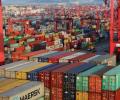
India's trade deficit reached a six-month high of $31.98 billion in July, driven by a sharp increase in imports, particularly crude oil, electronic goods, coal, and fertilisers. Both merchandise exports and imports recorded their second-highest levels during the same period.

Inflows into foreign currency non-resident (bank), or FCNR (B), deposits have significantly underperformed market expectations, leading to a more than 1 per cent depreciation of the rupee against the dollar this week. Analysts point to fading RBI support measures, tepid interest due to rising global bond yields, and narrowing interest rate spreads compared to 2013 as key challenges.

Chandrasekaran's exit is more than a change of chairman. It represents the breakdown of the informal consensus that governed the Tata system under Ratan Tata.
Indian benchmark indices Sensex and Nifty saw a significant rebound in early trade, driven by a sharp decline in crude oil prices and easing geopolitical tensions in the West Asia, which improved market sentiment and reduced inflation fears. Track Sensex, Nifty on July 27.

The Haryana government has authorised the CBI to investigate the alleged involvement of five IAS officers in a Rs 590-crore fraud case involving IDFC First Bank. The CBI can now summon the officers for questioning.
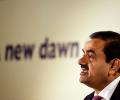
A US federal judge has permanently dismissed the criminal securities-fraud case against Adani Group chairman Gautam Adani and his nephew Sagar, closing nearly two years of prosecution without a trial. Gautam Adani stated, "Truth has prevailed," in response to the ruling.
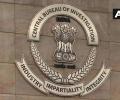
The Central Bureau of Investigation (CBI) conducted searches at multiple locations in Chandigarh and Panchkula in connection with a Haryana bank scam case and seized financial records and digital evidence linked to the alleged fraud.

The Indian government has clarified that consumers will not be charged for UPI transactions, and most merchant transactions will also remain free. This comes amidst speculation following an amendment to the Payment and Settlement Systems Act, 2007. Any future merchant discount rate (MDR) would be nominal, threshold-based, and aimed at ensuring UPI's long-term sustainability and infrastructure development.

AI4Bharat at IIT Madras and Josh Talks AI have launched 'Voice of India', a multimodal AI evaluation platform designed to assess AI systems against Indian conditions, languages, accents, and dialects. This platform aims to provide scientifically rigorous, India-specific evaluations, covering areas like Voice AI, large language models, document processing, safety, cultural appropriateness, and Indian legal reasoning, to build trust and enable informed deployment decisions.

RBI says polymer notes have a significantly longer lifespan, potentially reducing printing costs and replacement frequency.

LIC is the only brand in the Brand Finance India 100 2026 report that has a top five rank in both brand value and brand strength.
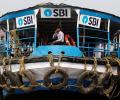
State Bank of India has launched a suite of AI-powered digital innovations on its YONO platform, enhancing both retail and business banking services. These new features include a 3-in-1 digital onboarding process, a sustainability tracker, integrated trade finance, and an AI virtual assistant, aiming to provide intelligent and future-ready banking experiences for its 53 crore customers.
Indian benchmark indices Sensex and Nifty saw a significant rebound in early trade, driven by softer-than-expected US inflation data which has reinforced expectations of a less aggressive monetary policy stance from the Federal Reserve, providing relief to global risk assets.

Indian benchmark indices Sensex and Nifty ended a four-day rally, closing lower on Tuesday following the introduction of a new Closing Auction Session (CAS) for F&O stocks, which has added a layer of volatility and led to an early adjustment in market structure.

The World Bank has increased India's economic growth projection for FY27 to 6.6 per cent, citing resilient domestic demand, while simultaneously cutting its global economic growth outlook due to the conflict in West Asia.

The Haryana government has authorised the CBI to investigate the alleged involvement of five IAS officers in a Rs 590-crore fraud case involving IDFC First Bank. The CBI can now summon the officers for questioning.

Indian benchmark indices, Sensex and Nifty, recorded their fifth consecutive day of losses, driven by investor caution over rising oil prices due to West Asia tensions and renewed concerns regarding US trade tariffs.
Indian stock markets witnessed a significant rally, with the Sensex climbing 964.58 points and the Nifty reaching 24,330, driven by strong buying in blue-chip stocks, particularly in the IT and banking sectors, amidst optimism over Q1 earnings and a shift towards large-cap investments.
Indian benchmark indices Sensex and Nifty extended their losses for the fourth consecutive session, with the Sensex declining 363.66 points and the Nifty dipping 126.65 points, primarily due to a sharp jump in Brent crude oil prices to USD 98.32 per barrel amid escalating tensions in West Asia.
